Upper East Side Luxury Condos and Real Estate are Much in Demand
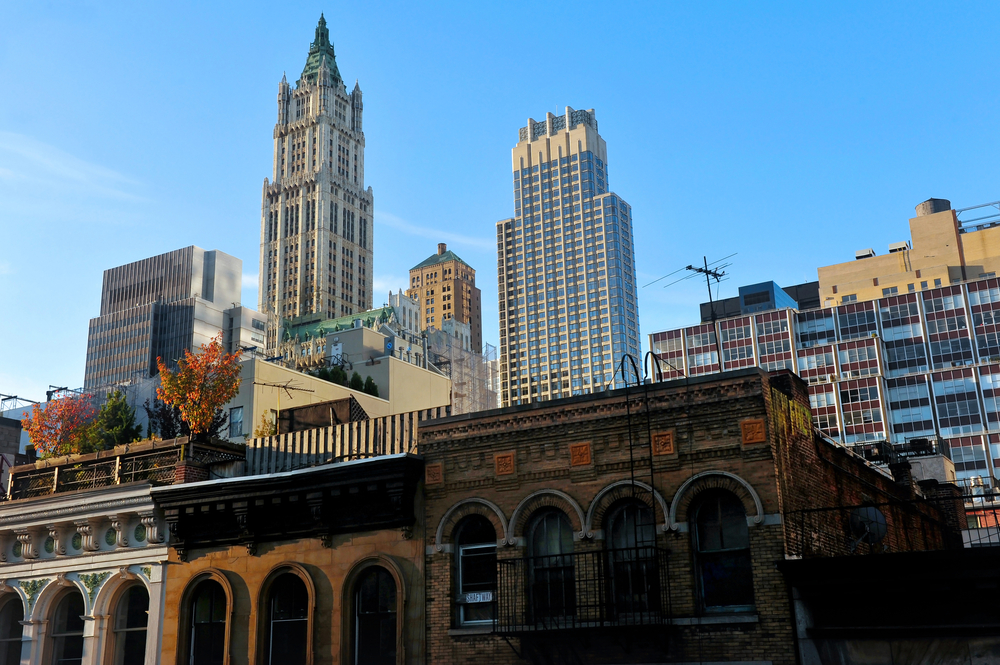
Upper East Side luxury condos and real estate command high prices because of the incredible reputation the area has for being chic and because the locale has so many things going for it. The district is close to the city’s central business district. It has a profusion of swank shops and restaurants. There are a host of cultural amenities close at hand, and the neighborhoods that surround it are likewise full of retail shops, office towers, and entertainment venues.
The neighborhood runs north and south from 96th St. to 59th St, and east to west from the East River to 5th Ave. along Central Park. Formerly called the Silk Stocking District for its opulence, the place remains one of the most affluent sections of New York City. It originally began to develop in the 18th Century as a market garden area to serve the need for produce of the fast growing metropolis at the southern end of Manhattan. In 1837 the New York and Harlem Railroad laid tracks into the area and established a station at 86th St around which commercial development began. By the mid 19th Century, farm land had largely given way to subdivided parcels containing businesses and homes. The area was not considered fashionable at the time because of the presence of heavily trafficked rail lines.
20th Century Sees Luxury Housing Arrive
Once the Park Avenue Railroad became a subterranean line in 1910, well to do New Yorkers began building mansions and fancy townhouses here. The Vanderbilt family built a mansion along 5th Ave. in the 1850’s. In the 1870’s a row of posh townhouses was built along 5th Ave., between 57th and 58th Sts. Fancy villas were built along the East River. Gracie Mansion is the only one that remains to this day.
5th Ave. fronting Central Park became lined with mansions owned by the likes of Andrew Carnegie and the Rockefeller family. By 1916, apartment houses began replacing the row of stately mansions.
Upper East Side Luxury Condos and Real Estate About Multiple Landmarks
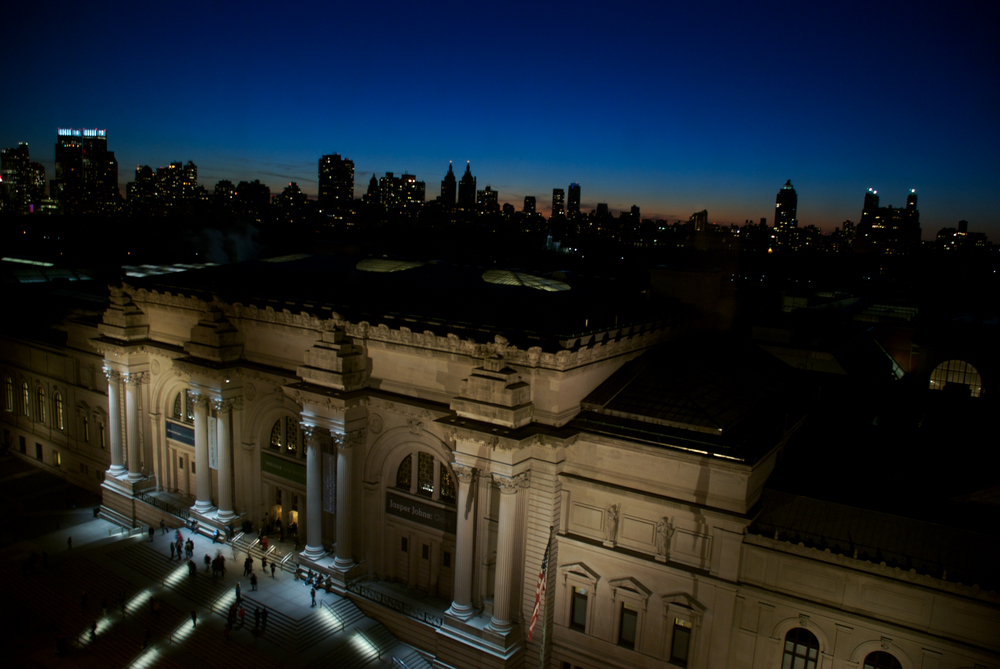
Upper East Side luxury condos and real estate are close to some of the most famous museums in the world. The section of 5th Ave. along Central Park that contains most of them is called “Museum Mile.” The table below lists just some of them.
- The Asia Society Museum
- Cooper Hewitt National Design Museum
- The Frick Collection Museum
- The Goethe Institute of New York
- The Jewish Museum of New York
- The Metropolitan Museum of Art
- The Museum of the City of New York
- The Morgan Library and Museum
- The National Academy of Design
The neighborhood also includes such renowned hotels as the Plaza, the Carlyle, and the Bentley. Many high end shops may be found in the Upper East Side along with some of the best restaurants in the city. Many doctors and lawyers maintain offices here.
For more information about Upper East Side Luxury Condos and Real Estate CLICK HERE to speak with Doug Heddings
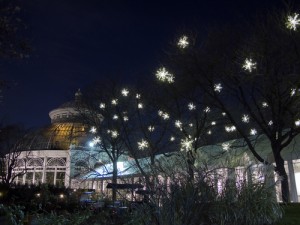
- Location: 2900 Southern Boulevard, Bronx NY, 10458
- Phone: 718.817.8700
- Website: http://www.nybg.org
- Tickets: $15-$25
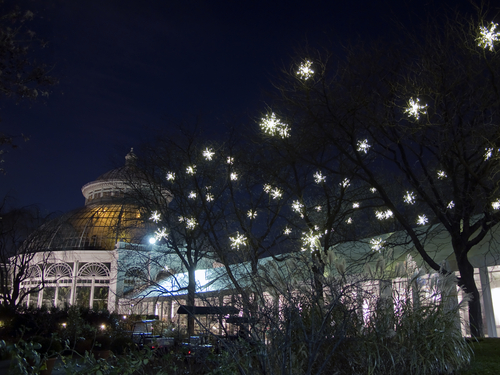
One of New Yorkers’ favorite traditions is the New York Botanical Garden Holiday Train Show. The event takes place every year and it’s a pleasure for both children and adults. The New York Botanical Garden will include 140 replicas of the most famous landmarks in the city and various holiday trains that will travel around them. Replicas such as the Brooklyn Bridge or the Statue of Liberty are manufactured from natural materials like twigs, leaves, bark and seeds. The exhibit is housed in the Enid Haupt Conservatory and it will certainly draw your attention.
This cherished tradition brings together individuals of all ages. They come to the New York Botanical Garden not only to admire the great show, but also to shop, drink hot chocolate, or eat lunch and gingersnaps, and walk around the garden. This year’s event will last from November 17, 2012 to January 13, 2013. Taking your kids during the holiday season to the Botanical Gardens to see the exhibition will surely make them want the most beautiful train as a Christmas gift.
The 140 replicas that symbolize iconic structures and buildings will be presented under hundreds of twinkling lights. The landmarks are crafted at Applie Imagination, by Paul Busse and his talented team. The natural materials used to craft the replicas are pine cones, bark, seeds, twigs, fruits and stems. Some of the most famous landmarks will be the Brooklyn Bridge, the Penn Station, the New York Public Library, the Yankee Stadium, St. Patrick’s Cathedral, and Radio City Music Hall. Since it is called the Holiday Train Show, the trains could not miss from this equation. Visitors will have the chance to admire large scale model trains that will travel through a quarter-mile of ground. The models will include trolleys, high-speed passenger trains, modern trains, streetcars and old American steam engines. The reflecting pool of the Conservatory will also feature cable cars. The children will love famous trains and locomotives like Tank Engine and Thomas. All these beautiful trains will travel past cascades and waterfalls, through tunnels, along overhead trestles and across rustic bridges.
The New York Botanical Garden Holiday Train Show also features the Artist’s Studio. This is a very popular event that shows how the models and replicas are manufactured. It also presents the models in various completion stages including the addition of the plants (radish seed lights or magnolia leaves roof shingles) and the structures’ framing.
The 2012 edition will also include new additions such as the Macy’s flagship location replica. Moreover, the Artist’s Studio will present a botanically inspired train and 2 trolleys. These models will travel on their own tracks. The Studio will also have replicas of international and national landmarks and sites like Boston Harbor Lighthouse, the Parthenon, Route 66 Diner and the Sphinx.
Don’t forget to take the children to the Gingerbread Adventures. Here, the little ones will have the opportunity to explore the various spices included in the gingerbread recipe. There will also be a gingerbread playhouse adorned with candies, frosting, and gingersnap cookies. Finally, don’t miss engaging representations like Bar Car Nights, Thomas and Friends, and various puppet shows.
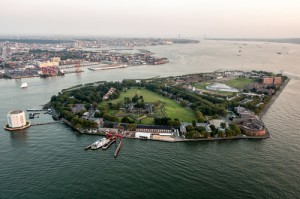
Historic Site Where Two Rivers Meet
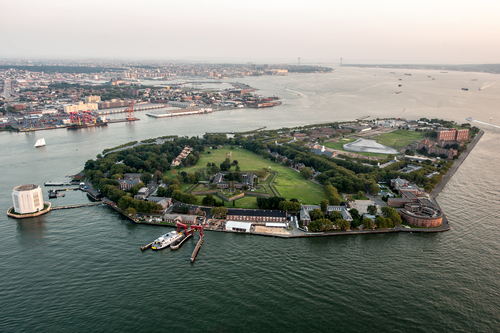
Governors Island National Monument covers 22 of the 172 acres of Governors Island. It is strategically located off the southern tip of the island of Manhattan where the Hudson and East Rivers converge in New York Harbor.
In October of 1995, the U.S. Coast Guard announced that it was closing its facilities on Governors Island. Their base there was established in 1966 after the U.S. Army closed Fort Jay which had been an Army post there since 1794. The Coast Guard closure was part of a cost cutting effort that resulted in a $30 million savings. The land was offered for sale to the city and state of New York.
Just before leaving office, President Clinton established the Governor Island National Monument on January 19, 2001. While the Presidential Proclamation did not fully
establish the monument’s boundaries, it did declare the intention of the federal government to preserve the fortifications of Fort Jay and Castle Williams which were the most historic features on the island.
President Bush proceeded with plans to sell the land to the city and state. On January 31, 2003, the land was transferred to the National Trust for Historic Preservation. This agency transferred 22 acres of the land to the U.S. Department of the Interior for establishment of a national monument. The remaining 150 acres were given over to the Governor Island Preservation and Education Corporation which is a joint commission of the state and city. They administer the locale and oversee redevelopment.
Strategic Point for Protection of Harbor
Governors Island has long served as an outpost to protect New York from attack by sea. Castle Williams and Fort Jay were both built for this purpose between 1806 and 1811. They played important roles during the War of 1812 and the Civil War. They were also strategic defensive position in both Worlds Wars.
Fort Jay is sited on the highest point on the island. Its defensive walls slope down towards the waterfront. Castle Williams is sited on a rocky promontory that overlooks the harbor channels.
Military Use Changes over Time
By the 1830’s the defensive functions of Castle William and Fort Jay had declined, but an Army post developed around them. The post evolved into a major headquarters of the army by the 1870’s. This function continued until the base was closed down in 1965. The residential buildings and other structures are included in the Governors Island National Historic Landmark District.
The island has been open on a seasonal basis in summer since 2003. More than 400,000 people visited it in 2010. The island gives people the unique opportunity to learn and study 200 years of military history connected to the island’s legacy. Educational opportunities abound here for learning about the history of harbor defense for the Port of New York.
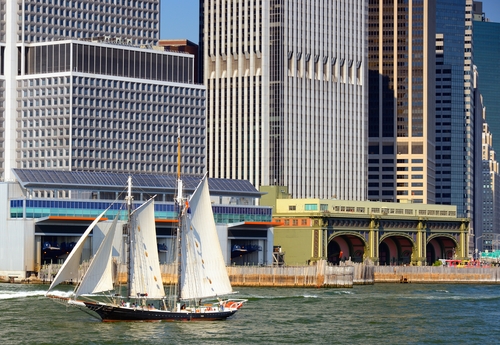
Governors Island National Monument is a spectacular location for parkland. It affords scenic views of the Manhattan skyline as well as more distant views of other portions of the city and the New Jersey shore.
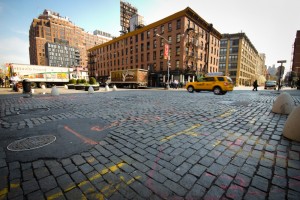 Meatpacking District Luxury Condos and Apartments Attractive to Creative Professionals
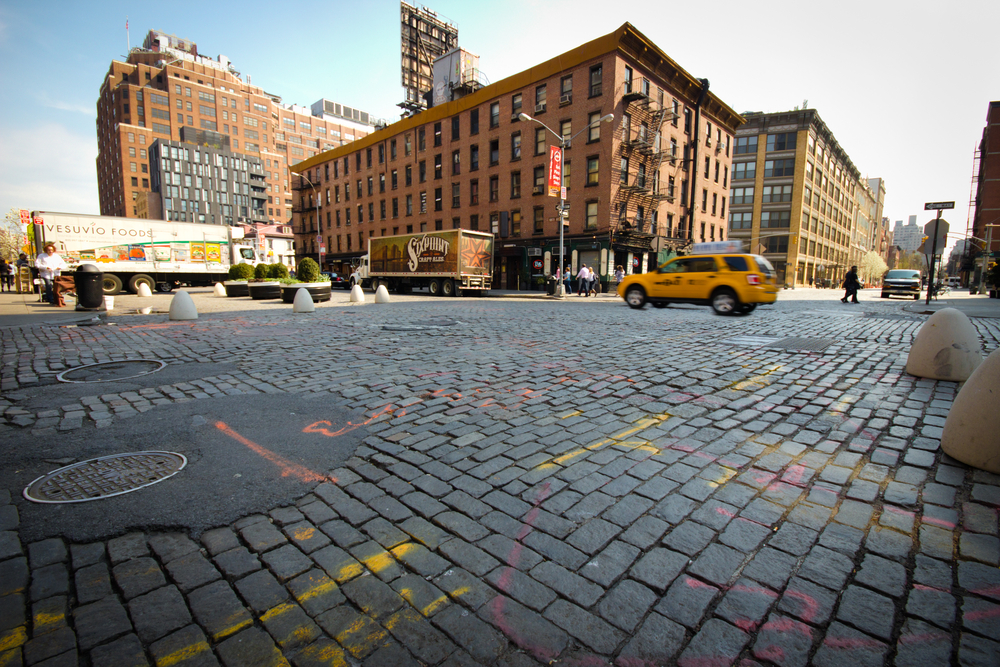
Meatpacking District luxury condos and apartments are located in lower Manhattan. The district roughly runs north to south from West 14th St. to Gansevoort St. From east to west, it goes from the Hudson River to Hudson St. Some designations have it running north to West 16th St and east beyond Hudson St.
Development here dates back to the mid 19th Century. Prior to that, it was the location of Fort Gansevort and part of Greenwich Village. The expansion of New York City northward from the southern tip of Manhattan eventually overwhelmed the area. The district retains an irregular pattern of streets which resulted from the merging of the Greenwich Village street layout with that imposed by the city of New York under the Commisioners’ Plan of 1811. This strove to impose an orderly grid on the undeveloped portions of Manhattan.
Meatpacking district luxury condos and apartments occupy some of the original rowhouses that began being constructed here in the 1840’s. Townhouses were also built, and many were later subdivided into tenements. Some of these units have been renovated to include their original Greek Revival Style elements that were popular at the time.
Freight yards of the Hudson River Railroad replaced Fort Gansevoort in the mid 19th Century. The district continued to develop as a mix of heavy industry and residential which had become unusual by that point with most areas of the city tending towards one or the other.
Places to See and Their Websites
District Experiences Renewal
The meatpacking district became steadily more densely packed with both industry and residences throughout the 19th and into the 20th century. Elevated rail lines and subways meant higher volumes of freight and people could be readily shuttled in and out of this dense section of city. The freight yards of the Hudson River Railway became an open air space for the buying and selling of regional produce starting in 1879. Brick buildings on the river side of West St. were employed for the sale of meat, poultry, and dairy beginning in 1884. 250 slaughterhouses and packing plants were in operation here by 1900. Since there removal the area has become increasingly popular for residential use as it has such a convenient location in lower Manhattan.
For more information on Meatpacking District Luxury Condos and Apartment CLICK HERE to speak with Doug Heddings
If you’re in the process or have been contemplating moving to an apartment in Manhattan, choosing what area to live will be dependent on whether you’re interested condos or co-ops. Although co-ops account for most of the apartment listings in Manhattan, a wave of newly constructed condos have been introduced over the past 10 years. There have also been of buildings that have been reconstructed in condos. What are some of the differences between condos in Manhattan and co-ops in Manhattan?
Manhattan Condos
Purchasing a condo in Manhattan is a straightforward way for you to become an owner of NYC real estate. After purchasing a condo in Manhattan, you’re provided with the deed and the keys to your apartment. As mentioned earlier, a large majority (roughly 80%) of the apartment inventory in Manhattan are co-ops but many of the newly constructed apartments in the area are luxury condos. If you’re more interested in becoming an owner of New York real estate with the freedom to customize the property as you wish, Manhattan condos are the ideal choice. Condos in Manhattan continue to grow in popularity every year so you may want to act as soon as possible.
Manhattan Co-ops
The real estate market in Manhattan is still predominantly made up of co-op buildings which second as socialist hubs. These co-op buildings are owned by real estate firms that sell shares that accredits shareholders/buyers to property leases. The owners of co-ops have privilege to their apartments but do not own the apartment as condo owners do. Co-op buyers pay monthly fees for maintenance purposes such as utilities, insurance, taxes, etc..A percentage of the co-op fees are tax deductible. The co-ops in Manhattan are known for having stricter policies which are administered by the co-op’s boards which are selected by residents to handle building concerns. Co-ops are all over the place in the Upper East side, Upper West side and Gramercy Park areas.
For more information on Manhattan luxury condos and co-ops, CLICK HERE
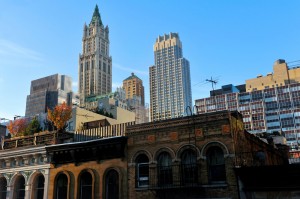 TriBeCa Has Some of the Highest Priced Property in NYC
Tribeca, which is also sometimes written as TriBeCa, is a New York City neighborhood located in lower Manhattan. The name is short for triangle below Canal St. The triangle is bordered by Canal St., West St., and Broadway. The Tribeca film festival is held here.
This zone was one of the first residential areas to be developed in New York back in the late 18th Century. By the middle of the 19th Century, it had grown into a commercial center with many stores and loft buildings. Broadway was the center of such development.
An extension of the IRT Broadway and 7th Ave. Line opened here in 1918 spurring further development. The extension of 7th Ave. and the widening of Varick St. also helped improve access. An elevated train line also used to run along Greenwich St., but it was demolished in 1940.
Tribeca’s industrial base had virtually vanished by the 1960’s. The large amounts of vacant commercial space led many artists to locate here in order to take advantage of the sizeable spaces available at low cost. It allowed them to afford spacious studios.
Walking Tours a Big Hit
The Tribeca Open Artists Studio Tour was inaugurated in 1996. It was organized by a group of artists as a non profit group designed to empower artists who lived and worked in the district. It also served as an educational service for the public. It gave people free walking tours of artist’s studios allowing them to see how community artists lived and worked.
Tribeca was hit hard financially by the 9/11 terrorist attack, but government grants and various incentives helped the region to rebound more strongly than ever. The Tribeca Film Festival proved instrumental in the recovery. The festival also helped establish New York City as a major film making center.
Tribeca is a popular location for filming. Numerous films and television shows have been shot here. A large number of celebrities live here such as Josh Harnett, Mariska Hargitay, Edward Albee, Laurie Anderson, Jay Z, Mariah Carey, Daniel Craig, Jennifer Connelly, Scarlett Johansson, Harvey Keitel, Billy Crystal, Robert De Niro, Leonardo DiCaprio, Beyonce Knowles, David Letterman, James Gandolfini, Sarah Michelle Gellar, Heather Graham, and Debra Messing.
High Prices Now the Norm
Tribeca is now seen as one of the most fashionable places in New York City and for that matter in the country as a whole. The 10013 zip code found here was recently ranked by Forbes Magazine as the most expensive zip code in the city.
In the 70’s when SoHo established the legal right for artists to live in the place where they worked. Parts of the area then known as the Lower West Side sought the same privilege. A map of the district showed Lispenard St to contain a street that stuck out because of its triangular nature. The Petitioners therefore called their group the triangle Below Canal Block Association. They then shortened the name to the Tribeca Block Association.
 Manhattan’s luxury condos have long been of interest to buyers from Latin American countries. Even throughout the economic downturn, Latin American buyers have been scooping up high-end Manhattan real estate, although the countries from which these buyers originate is always changing.
Largest Latin American Buyers Continue to Change
Buyers from Argentina have recently charged ahead of Brazilians as the biggest buyers of luxury condos in Manhattan, mirroring a trend that has also been seen in Miami. However, a shift seems to be occurring. Buyers from Venezuela are starting to amp up their purchases on the island, and have recently bought several multi-million dollar penthouses at One Museum Mile.
The reason for this shift could be the upcoming elections in Venezuela in early October. Wealthy Venezuelans are anxious to get their money of the country before there is a possible shift in power. Henrique Capriles is challenging President Hugo Chavez, and the race is known to be a close one.
International Buyers Strong in Manhattan
Not only are Latin American’s buying up luxury properties in Manhattan, but many foreign buyers are active in the market. In 2011, a report issued stated that overseas buyers account for one third of New York City condo purchases. They also represent 15 percent of total purchases in Manhattan.
Although these numbers are strong, it is still down from its peak in 2000. At that time, nearly 30 percent of buyers in Manhattan were foreign. The largest purchasers of luxury properties are from Russia, China, Brazil and Argentina. At the turn of the millennium, the biggest foreign buyers were from European countries, with most coming from Ireland.
The weak American dollar is the reason behind many of these foreign purchases. Condo sales have outweighed co-op sales in the last year, and foreign buyers are a big reason for that. Foreign buyers most often purchase properties with cash, so they are not affected by the recent tightening of the credit market.
Foreign Buyer Sets Record
Foreign buyers are also behind the recent increase in new development, and the most expensive condo ever sold in New York was purchased by a Russian buyer, composer Igor Krutoy. In 2011, Krutoy purchased a 6,000 square foot condo in the Plaza Hotel. The sale price for the 12th floor condo was a staggering $48 million. After making offers on upscale properties all over the city, Krutoy finally decided to make an offer that couldn’t be out-bid. The unit has incredible views of Central Park, although the unit does not comprise the entire 12th floor.
 Financial District Condos and Luxury Apartments an Attractive Deal
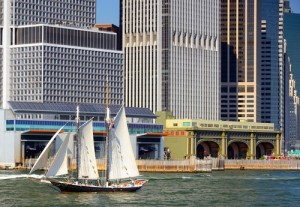
Financial district condos and luxury apartments are in high demand because of the incredible popularity the locale enjoys both as a place to live and to do business in. The pace of life seems to move a bit faster here in this portion of Manhattan. While traffic may move slowly on the congested streets, the pedestrians on the equally jammed sidewalks move at a brisk pace while about them bicycle messengers dart in and out from streets and sidewalks to rush their packages to destinations as quickly as possible.
The area has rebounded tremendously since the 9/11 attacks as the table below shows.
- Annual number of tourists over ten million, about 40,000 per day.
- Estimated number of weekday workers 309,500.
- 61,000 residents living in 325 residential buildings.
- Average family income $188,000.
- Number of hotels 21. There were only 5 in the region before 9/11.
Describing the Place in Detail
New York City’s Financial District is in the southernmost portion of the borough of Manhattan. It is the headquarters for many of the city’s renowned financial institutions such as the New York Stock Exchange and the Federal Reserve Bank of New York. In addition, about 58,000 people live in the district. The work day population swells to around 300,000. Broad St. and Wall St. are at the heart of the district which lies south of City Hall Park down to the southern end of Manhattan. Fulton St. marks the eastern edge and the Hudson River is the western boundary.
In the early 20th Century, the area was often called the Insurance District because of the large number of insurance firms headquartered there. It also matches the boundaries of the New Amsterdam settlement that existed in the 17th century.
The first U.S. Capitol was located here. George Washington was inaugurated at what is now the Federal Hall National Memorial at the corner of Nassau St. and Wall St. Many
of the buildings in the area have been converted from office towers into condos and apartments to accommodate the growing residential population which has tripled in the last decade.
Financial District Home to Numerous New Attractions
A number of tourist attractions have opened here in recent years such as the Museum of American Finance and the New York City Police Museum. The traditional ticker tape parades down Broadway begin here at Bowling Green. The route is sometimes referred to as the Canyon of Heroes because of the tall buildings that line the avenue. The Museum of Jewish Heritage and the Skyscraper Museum are in adjacent Battery Park City.
Sometimes the district is simply called Wall St, but that term is more often applied to the financial operations that are located here. Financial District condos and luxury apartments are coveted both by people who work in the area and visitors who admire the energy and attractions that abound here.
For more information about Financial District Condos and Luxury Apartments CLICK HERE to speak with Doug Heddings

Upper West Side Luxury Condos and Real Estate Attract Interest
Upper West Side luxury condos and real estate bring premium prices because the neighborhood is seen as one of the most desirable locations in the New York City area. It has become increasingly fashionable in recent years attracting a profusion of high end shops, swank restaurants, and trendy clubs and bars. The district lies between Central Park and the Hudson River and runs north to south from 110th St. to 59th St. Like its neighbor across Central Park, the Upper East Side, the district is affluent and primarily residential, but it has a reputation for attracting more artistic and culturally oriented people while the Upper East Side is thought to appeal more to commercial and business types.
Broadway acts as the spine of this district. It runs diagonally across it to 77th St and then runs parallel to the Avenues. A number of educational institutions and landmark structures are found here including those listed below.
- Columbia University
- Barnard College
- Bank Street College of Education
- The National Council of Churches
- Union Theological Seminary
- Manhattan School of Music
- Teachers College
- Jewish Theological Seminary of America
- Cathedral of Saint John the Divine
- Grant’s Tomb
Farmland Developed into Chic Neighborhood
Dutch settlers in the early 18th Century established farms here calling the settlement “Bloemendaal” which was later Anglicized to Bloomingdale. By the start of the 19th Century, many well to do New Yorkers began building mansions here. As the century progressed, more and more homes were built on steadily shrinking parcels and parts of the district became lower class. The creation of Central Park caused many squatters evicted from park land to relocate here, and some parts of the Upper West Side became notorious for the collection of taverns and gambling dens.
Elevated trains were built along 9th Ave. in the 1870’s. This led to a building boom that lasted into the early years of the 20th century. Because so many people had moved into the neighborhood, it became the first place in New York City to be served by a subway line which opened in 1904. The IRT Broadway line had 11 stations between 59th St. and 125th St.
The IRT Subway line and others that followed in addition to elevated rail lines encouraged increasing population density, and the area became filled with tenement housing.
Upper West Side Luxury Condos and Real Estate Redevelop District
Many of the tenement buildings began to be torn down in the 1960’s in large scale urban renewal projects. The Lincoln Center for the Performing Arts was the first of these efforts. Riverside Park was expanded by covering the tracks of the Hudson River Railroad with a promenade. Upper West Side luxury condos and real estate are now sandwiched between the narrow strip of park that runs along the Hudson River and the broader expanse of Central Park.
For more information about Upper West Side Luxury Condos and real estate CLICK HERE to speak with Doug Heddings
They say there’s nothing better than a good laugh to boost your mood. If you are in need of a laugh or if you simply enjoy watching comedy shows then you should not miss the New York Comedy Festival on November 7 – 11, 2012. New York City is a place where big-name comics hold performances all year-round. Thus, no one can say that New Yorkers don’t know how to have fun. Still, when the New York Comedy Festival comes to the city, everybody’s attention is redirected towards this amazing event. The show brings together old favorites and rising stars and has become one of the most popular events in the country.
This is truly the biggest comedy festival in the US. It features more than 150 performers and over 10 venues. It includes big names like Kevin Hart, Robin Williams, Aziz Ansari and Ricky Gervais. Some of the most important venues will be the Madison Square Garden, the Carnegie Hall and the Apollo Theater.
The New York Comedy Festival had its first edition in 2004 and in 2012 it will celebrate its 9th year. The Festival is produced and organized by Carolines on Broadway and the Comedy Central. Over the years, New York City stages have accommodated numerous big names that took the time to stop by the Festival. Some of the comedy stars who have participated in this extraordinary event were Craig Ferguson, Sarah Silverman, Louis C. K., Andy Samberg, Brian Regan, Joy Behar, Tracy Morgan, Dane Cook and Denis Leary. All these great comedians have performed in famous venues including Carolines on Broadway, Avery Fish Hall, the Hammerstein Ballroom, the Beacon Theatre and Town Hall. At the same time, the New York Comedy Festival has presented panel discussions at 92Y TriBeCa and 92nd Street Y and Paley Center for Media and improv and sketch comedy at UCB Theatre. Therefore, the event has a little something for every comedy lover out there. In 2007, a new event was introduced as part of the New York Comedy Festival. It was called “Stand-Up for Heroes” and it was organized in honor of the Bob Woodruff Foundation. That year, the stages were filled with stars like Bruce Springsteen, Robin Williams, Tony Bennett, Ricky Gervais, Regis Philbin, Jerry Seinfeld and Conan O’Brien.
This year, every day will include a highlight. On November 7th don’t miss the performance offered by Ricky Gervais and John Hodgman. The event will take place at the Town Hall. It will be a simple chat, but it will be full of jokes and laughter. On November 9th make sure to watch “Buried Alive!” by Aziz Ansari. The star from “Parks & Recreation” will offer a memorable show. November 9th will also feature a special performance by Patton Oswalt. Saturday, November 10th will feature most of the important shows offered by Bill Maher, Kevin Hart and Jim Gaffigan. The most expected show of the Festival will take place on November 11th and will be held by Robin Williams and David Steinberg.
For more information on New York City Luxury Condos, CLICK HERE to speak with Doug Heddings.